
A purchase specification that simply says “sunflower oil” leaves too much open to interpretation. In the edible oils trade, crude oil vs refined oil is a material distinction affecting product handling, shelf life, sensory profile, documentation, pricing, and suitability for a final food application. For importers, manufacturers, and bulk buyers, the correct choice starts with the intended use of the oil, not with a general preference for one processing stage.
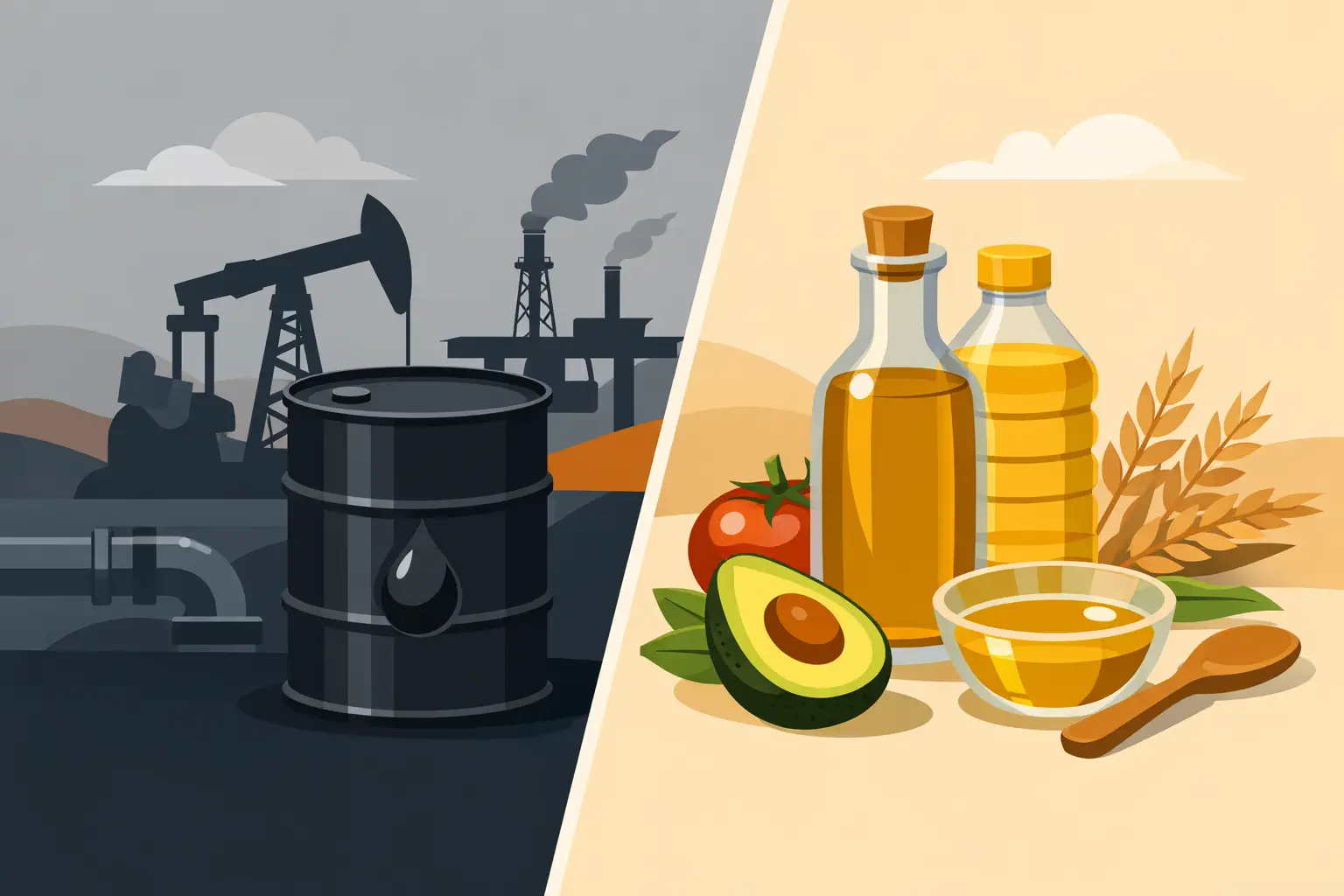
This article refers to vegetable oils, including sunflower oil. The term crude oil can also refer to petroleum, but that is a separate commodity category with different processing and commercial requirements.
Crude Oil vs Refined Oil: The Basic Difference
Crude vegetable oil is the oil obtained after extraction from oilseeds and initial separation of solid material. Depending on the process, it may be pressed or solvent-extracted and then filtered or settled to remove much of the meal and other suspended matter. It remains a food-grade raw material only when produced, handled, and specified for the relevant food supply chain, but it has not completed the full refining sequence used for standard edible retail and food-manufacturing oil.
Refined oil has undergone additional processing to remove or reduce free fatty acids, phospholipids, pigments, waxes, odor-active compounds, trace metals, and other components that may affect stability or performance. For sunflower oil, the typical commercial route includes degumming, neutralization or physical refining, bleaching, winterization or dewaxing where required, and deodorization. The exact sequence depends on the crude oil quality, plant design, required specification, and destination market.
The practical difference is straightforward. Crude oil retains more of the natural compounds carried from the seed and therefore requires further processing before many end uses. Refined oil is standardized for direct use in food production, foodservice, bottling, or industrial formulations, subject to the agreed specification.
What Crude Vegetable Oil Contains
Crude sunflower oil is not merely refined oil with a stronger color. Its composition reflects the seed, harvest conditions, storage quality, extraction method, and initial processing controls. It typically contains triglycerides as the main oil fraction, along with varying levels of free fatty acids, moisture and volatile matter, insoluble impurities, phosphatides, waxes, pigments, and odor compounds.
These components matter because they influence both refining yield and storage behavior. A higher free fatty acid level, for example, can increase refining losses or alter the economics of physical versus chemical refining. Higher phosphorus may require more intensive degumming. Waxes are particularly relevant in sunflower oil because they can create haze or sediment when the oil is stored or displayed at lower temperatures unless they are removed through winterization.
Crude oil is commonly purchased by refineries that have their own processing capacity. It may also be suitable for specialized industrial uses where the buyer will perform further treatment. A buyer should not assume that all crude oil is interchangeable. The contract should define measurable quality parameters, including free fatty acids, moisture and volatile matter, insoluble impurities, phosphorus, color, odor condition, and, where relevant, pesticide residues and contaminant limits.
What Refining Changes in the Oil
Refining is designed to produce an oil with predictable physical, chemical, and sensory characteristics. Degumming removes phospholipids and related materials. Neutralization or physical refining reduces free fatty acids. Bleaching adsorbs pigments, soaps, trace metals, and oxidation-related compounds. Dewaxing improves clarity at lower temperatures. Deodorization uses steam under vacuum and elevated temperature to remove volatile compounds responsible for unwanted odor and flavor.
The result is generally a lighter-colored, milder-tasting oil with better oxidative stability in ordinary distribution conditions. Refined sunflower oil is valued in food manufacturing because it can provide a neutral base for frying, baking, sauces, dressings, margarine systems, canned foods, and private-label bottled oil.
That consistency does not mean every refined oil has identical performance. Fatty acid profile, high-oleic versus conventional sunflower oil, antioxidant management, packaging, and storage conditions still influence suitability. A buyer selecting oil for high-temperature frying should assess oxidative stability and the specific frying profile, not rely only on the word “refined.” A buyer producing a cold-filled dressing may place more emphasis on clarity, flavor neutrality, and low-temperature stability.
Processing Stage and Commercial Fit
The choice between crude and refined oil is largely a question of operational capability and supply-chain design.
A refinery with established intake, laboratory, storage, waste handling, and process controls may buy crude sunflower oil to capture value through in-house refining. This approach can offer commercial flexibility, particularly when the buyer can optimize refining runs across multiple origins or grades. It also places responsibility on the buyer to manage yield, process losses, by-products, energy consumption, and compliance with finished-product requirements.
A food manufacturer, distributor, or private-label buyer usually benefits from purchasing refined oil. The product arrives closer to its final application and reduces the need for capital-intensive processing. It also simplifies specification alignment when the buyer needs repeatable color, odor, clarity, and shelf-life performance across production batches.
Neither route is automatically lower cost. Crude oil may have a lower purchase price per metric ton, but that price excludes refining costs, yield loss, utilities, labor, quality assurance, and the value of time in the processing cycle. Refined oil carries the cost of completed processing, but it may reduce operational risk and inventory complexity. A valid comparison uses the delivered cost of usable oil, not only the quoted commodity price.
Quality Specifications Buyers Should Review
For crude oil, the specification should focus on the parameters that determine processability and refining economics. Free fatty acids, phosphorus, moisture and volatile matter, insoluble impurities, and color are central controls. Buyers may also require limits for contaminants based on the destination market and intended use. Sampling method, retained samples, test methods, and claim procedures should be agreed before shipment.
For refined oil, the specification should confirm the properties needed for the finished application. Typical points include free fatty acids, peroxide value, anisidine value or other oxidation indicators where applicable, moisture and volatile matter, insoluble impurities, color, odor and taste, cold-test or clarity requirements, and fatty acid profile. Product documentation should also identify whether the oil is conventional or high oleic, winterized, deodorized, and suitable for the claimed food application.
For both grades, buyers should review packaging and transport conditions with the same discipline as laboratory values. Bulk edible oil requires clean, suitable tanks or flexitanks where appropriate, traceable loading procedures, protected transfer points, and records supporting lot identification. Exposure to moisture, residues from incompatible cargoes, or excessive heat during transit can undermine an otherwise compliant shipment.
Storage, Shelf Life, and Handling
Refined oil is generally easier to store and distribute because the components most likely to cause haze, strong flavor, or rapid quality deterioration have been reduced. Even so, it should be protected from oxygen, light, high temperatures, and contamination. Nitrogen blanketing, clean dedicated storage, controlled turnover, and suitable packaging can materially support quality retention.
Crude oil requires closer attention because its residual gums, waxes, pigments, and free fatty acids can contribute to changes during storage. Temperature management is particularly relevant for sunflower oil. Cooling can lead to visible cloudiness from wax crystallization, while unnecessarily high temperatures can accelerate oxidation or affect quality. Storage instructions should reflect the oil grade, expected holding period, and planned refining schedule.
Shelf-life expectations must be tied to the actual specification and logistics model. A refined, deodorized, winterized oil packed for food use has different storage expectations than bulk crude oil awaiting refinery intake. Procurement teams should avoid applying one universal shelf-life assumption to both products.
Origin and Supplier Controls Matter
Oil quality begins before extraction. Seed condition, harvest practices, storage, extraction controls, refinery capability, laboratory discipline, and loading procedures all contribute to the final product. For buyers sourcing sunflower oil from Ukraine, origin is commercially relevant because the country has a substantial agricultural base and long-standing oilseed processing capacity.
Supplier assessment should therefore go beyond a certificate of analysis. Buyers should establish whether the supplier is the producer or an intermediary, confirm the production site and available processing stages, review the consistency of product specifications, and align shipment terms with the required grade. An experienced producer can provide more direct visibility into raw material intake, processing controls, and lot traceability.
EKOBIOTEK operates as a Ukrainian producer of sunflower and vegetable oils, with manufacturing history dating to 2003. For B2B buyers, that producer role is relevant when consistency of supply, agreed specifications, and direct commercial accountability are central to the purchasing decision.
Choosing the Right Grade for the Application
Crude oil is appropriate when the buyer has refining capacity and intends to manage the conversion from raw extracted oil to a finished edible oil specification. Refined oil is appropriate when the buyer needs an oil ready for food manufacturing, distribution, bottling, or further formulation without a refinery step.
The purchase decision should be documented in the product brief: intended application, grade, required analytical limits, packaging format, destination-market requirements, expected delivery temperature, and acceptance procedures. This level of definition prevents disputes caused by treating crude and refined oil as variations of the same product.
The most useful procurement question is not which grade is better. It is which grade fits the buyer’s process, quality target, and total delivered-cost model. When those requirements are specified clearly, both crude and refined sunflower oil can serve a well-managed supply program.