
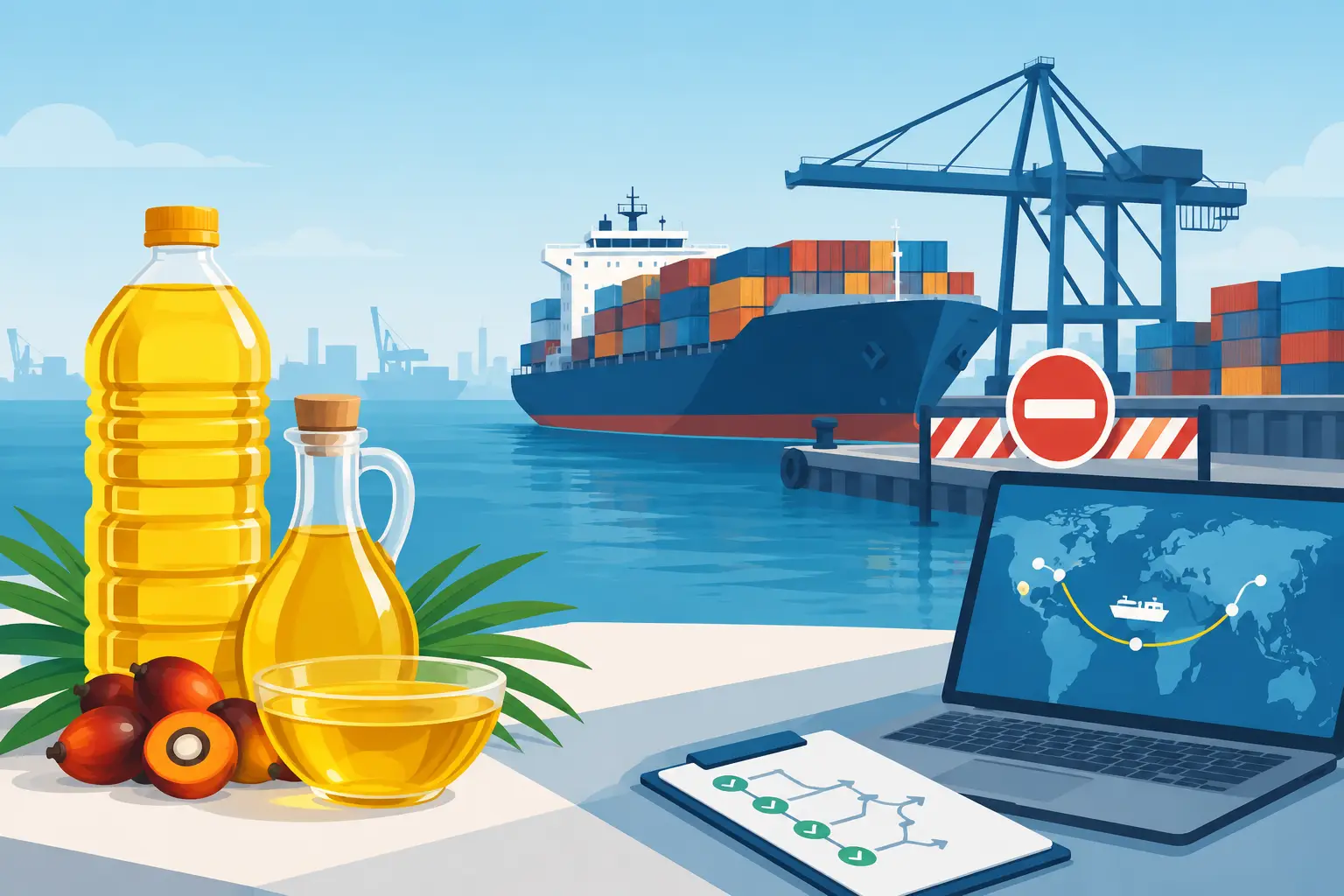
A port disruption response is not a logistics exercise that can wait for a vessel to arrive at anchorage. For edible oil buyers, a closed terminal, berth congestion, labor shortage, weather event, or inspection delay can affect inventory availability, cash flow, production schedules, and customer commitments within days. The priority is to establish facts quickly, protect cargo condition, and make decisions before delay costs become permanent.
Sunflower oil and other vegetable oils move through a supply chain that depends on coordinated production, tank storage, inland transport, terminal access, vessel loading, documents, and destination handling. A failure at one point can create pressure across the rest of the chain. Buyers need a response process that is commercial as well as operational.
Build a Port Disruption Response Before Cargo Is Delayed
The strongest response begins before a disruption is announced. Procurement teams should know which ports, terminals, carriers, inland routes, and storage facilities are critical to each supply program. This is especially relevant for bulk and flexitank shipments, where a missed loading window may affect tank availability, vessel schedules, and contractual delivery periods.
A useful operating plan identifies the decision-makers on both sides of the transaction. The buyer should know who can approve a route change, accept a revised loading date, authorize additional storage, or amend shipping instructions. The supplier should know which buyer contacts can confirm document requirements and delivery priorities without delay.
The plan should also separate disruptions by severity. A short weather closure may require only a revised estimated time of departure. A prolonged terminal shutdown may require a new port, a different vessel schedule, additional warehousing, or a change in delivery sequence. Treating every delay as an emergency creates unnecessary cost. Treating a serious closure as a routine delay creates larger exposure.
Start With Verified Operational Facts
When disruption occurs, first confirm the status of the cargo. Determine whether product is still at the production site, in inland transit, in terminal storage, loaded on a vessel, or waiting for discharge. Each position has different risks and different options.
Request a clear operational update that includes the terminal status, expected reopening date if available, vessel position, carrier instructions, container or tank status, and the latest document position. Information should be time-stamped. In a fast-moving disruption, outdated updates can lead to incorrect routing and inventory decisions.
For edible oils, cargo condition must remain part of the discussion. Delays can extend storage time and may require confirmation of tank suitability, temperature management where applicable, sealing, sampling procedures, and quality documentation. A route change that preserves the sailing date but creates avoidable handling or quality risk is not automatically the best commercial choice.
Protect Supply Commitments With Inventory Visibility
Port delays become more costly when buyers cannot see the inventory position beyond the affected shipment. Procurement, planning, and logistics teams should review available stock, cargo already on water, confirmed production, and customer demand by delivery period.
The central question is not simply, "When will this shipment move?" It is, "Which production lines, customers, or distribution locations will be exposed if it does not move on the current schedule?" This distinction helps teams direct limited inventory to the commitments with the highest operational or contractual consequence.
For a food manufacturer, a delayed oil shipment may affect a scheduled production run. For an importer or distributor, the issue may be stock coverage across several warehouses. The appropriate response depends on the buyer's inventory model, packaging requirements, and ability to substitute origin, grade, or shipment format.
Where practical, maintain a rolling view of days of supply by product type. Refined, crude, winterized, deodorized, or customer-specific oil specifications may not be interchangeable. A general inventory figure can create false confidence if available stock does not meet the required specification or destination regulations.
Use Alternative Routes Carefully
Alternative ports and transport corridors can reduce dependency on a single terminal, but they are not automatically lower-risk or lower-cost. A substitute route may involve longer inland transit, limited tank capacity, different carrier availability, additional transshipment, or document changes. It may also create different lead times for customs clearance and destination delivery.
Before redirecting cargo, compare the full landed effect: inland transport, terminal handling, storage, demurrage or detention exposure, freight differential, insurance implications, document amendments, and probable delivery date. The lowest quoted transport cost may not be the lowest total cost when production downtime or customer penalties are considered.
Buyers should also confirm whether the alternative route can handle the required shipment format. Bulk cargo, flexitanks, drums, and IBCs each have different terminal, carrier, and storage requirements. A route that works for containerized cargo may not work for a bulk edible oil program.
Keep Documents Aligned With the Physical Cargo
During a disruption, physical cargo often moves faster than paperwork. That creates avoidable problems at destination. Any change in port, vessel, consignee instruction, shipping date, or cargo split should be reviewed against the commercial invoice, packing list where applicable, bill of lading instructions, certificate requirements, insurance declarations, and destination import documents.
Document control is particularly important when a shipment is diverted after export procedures have started. Buyers should confirm who is responsible for amendments, what lead time is required, and whether the revised document set remains acceptable to banks, customs authorities, insurers, and downstream customers.
Do not assume that a carrier update is sufficient confirmation of a commercial change. Obtain written agreement on the revised shipment plan, cost allocation, and responsibility for additional charges. This is where a disciplined supplier relationship matters. Clear communication limits later disagreement over storage, re-routing, delay claims, or revised delivery terms.
Set Commercial Priorities Early
A port disruption often forces a choice between speed, cost, and certainty. It may be possible to move cargo quickly at a higher freight cost, wait for the original port to reopen, or split volumes across routes. The right choice depends on inventory coverage and the commercial value of the affected product.
Buyers should establish a threshold for escalation. For example, a delay that reduces inventory below a defined coverage period may justify premium freight or an alternative origin. A delay with adequate stock coverage may justify waiting, particularly when rerouting introduces quality, documentation, or handling risk.
Contract language should support this process. Delivery terms, force majeure provisions, notice requirements, demurrage allocation, quality obligations, and amendment procedures need to be understood before a disruption occurs. Operational teams should not be left to interpret contractual exposure under time pressure.
Work With Suppliers That Can Provide Clear Updates
Reliable response depends on more than carrier notices. Buyers benefit from direct communication with a producer that can confirm production readiness, available inventory, loading capability, product specifications, and realistic replacement timing.
EKOBIOTEK operates as a specialized Ukrainian producer of sunflower oil and vegetable oils, with manufacturing experience dating to 2003. For B2B buyers, producer-level communication can help distinguish between a port delay and a broader supply constraint. That distinction affects whether the best response is to reroute existing cargo, revise a loading schedule, or reserve future production.
Supplier communication should be concise and decision-oriented. Useful updates state what has happened, which cargo is affected, what options are available, what additional cost or lead time may apply, and when the next confirmed update will be provided. Reassurance without operational detail does not help procurement teams manage exposure.
Review the Event After Cargo Moves
Once cargo is delivered, review the disruption while the facts are still available. Compare the original schedule with actual timing, identify where information was delayed, assess added cost, and determine whether alternative routes performed as expected. The goal is not to assign blame. It is to improve the next response.
Some corrective actions may be simple: add a secondary terminal, revise the inventory buffer for a critical product, pre-approve carrier alternatives, or establish document amendment contacts. Others may require a broader sourcing decision. The appropriate level of investment depends on shipment volume, supply concentration, customer service commitments, and the cost of interruption.
A disciplined port disruption response gives edible oil buyers more than a way to manage a delayed vessel. It creates a practical basis for protecting supply commitments when conditions at the port are uncertain.